Understanding the Banalingam
At the ashram stands a form of the Banalingam — as Aruna and Karuna Banalingeshwaras, surrounded by 108 smaller Banalingams, each representing a Nakshatra and its specific Pada. For every being born on Earth, there is a Banalingam aligned with their birth star and pada.
-
A Banalingam is a naturally formed Shivalingam found only in the Narmada River basin. It is revered as a direct manifestation of Lord Shiva in a formless-form.
Tradition holds that these stones were formed nearly 14 million years ago, through a rare fusion of a huge meteorite and earthly elements, creating a unique crystalline stone with exceptional energetic qualities.
-
Centuries ago, Adi Shankara walked from Kaladi to Omkareshwar in Madhya Pradesh to meet his Guru.
From this same sacred land of Omkareshwar, Lord Shiva is now enshrined at Tiruvannamalai Tirumoolar Ashram in the form of the Banalingam—as Aruna and Karuna Banalingeshwaras.This sacred presence carries forward an ancient lineage, linking the Narmada River and Arunachala through grace and devotion.
-
Banalingams contain cryptocrystalline quartz, chalcedony, basalt, and agate.
This unique composition, combined with the naturally elliptical shape of the Lingam, is said to resonate precisely with the human energy centers.Among sacred stones found across the world, the Narmada stone is traditionally regarded as having a very high vibrational frequency.
-
Ancient texts including the Skanda Purana (Reva Khanda), Vayu Purana, Yoga Sara, and Meru Tantra praise the greatness of the Banalingam.
They speak of its presence as bringing harmony, peace, prosperity, and protection, and of its worship as a means to dissolve karmic burdens.
Even remembrance of the Banalingam is said to bring clarity and success. -
Tamil tradition reflects this understanding:
திருவண்ணாமலை நினைக்க முக்தி
பாண லிங்கம் நினைக்க சித்திRemembrance of Tiruvannamalai grants liberation. Remembrance of the Banalingam grants attainment.
Worship of the Banalingam in Tiruvannamalai kshetra is said to bestow both Bhukti (worldly well-being) and Mukthi (liberation).
-
Devotees who perform pradakshina around the Maha Banalingam and the 108 Banalingams, while chanting Shiva moola mantras, are said to receive the grace of Lord Parameshwara—awakening deep Shivānubhūti, along with material and spiritual blessings.
A deeper understanding unfolds through presence, devotion, and lived experience.
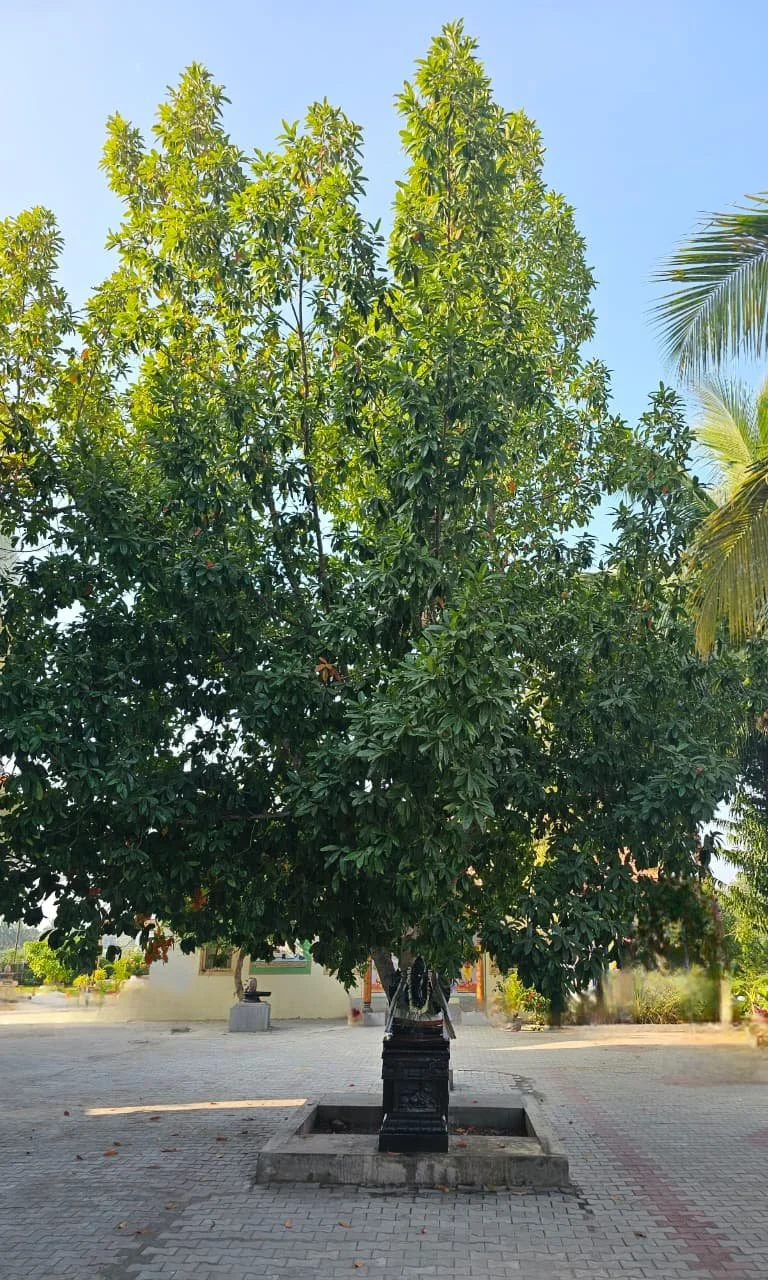
Rudrakshalaya
A Rudrakshalaya is a place where one or more Rudraksha trees preside over and enshrine a Banalingam.