FEBRUARY 15, 2026
Starting from 5:00 PM
MAHA SHIVARATRI
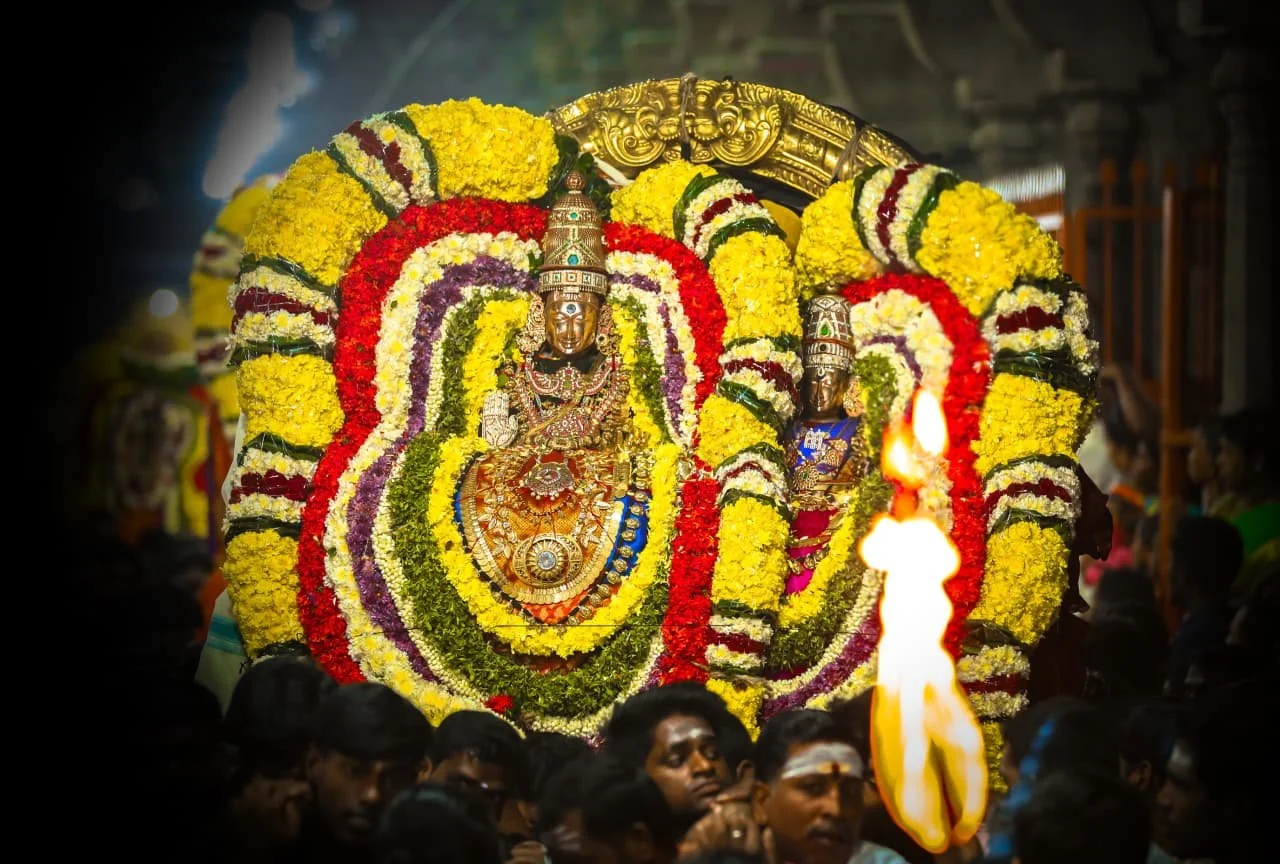
Maha Shivaratri is a night of devotion, celebration, and shared remembrance. At Tirumoolar Ashram, this sacred night is held as a living offering—welcoming all who feel called to gather, celebrate, and move with the rhythm of Shiva.
Evening & Night Puja Timings
This schedule offers a gentle flow for the night of Maha Shivaratri. Times are shared as guides, welcoming each person to enter the celebration in their own rhythm.
First Kalam:
6:30 PM — 9:30 PM
108 Shanka Abishekam, Laghu Nyasam, Rudra Parayanam, Alankaram, Rudra Tirshati Bilva Archana
Second Kalam:
9:30 PM — 12:00 AM
Second Kala Rudra Abishekam,Archana, Bhajans, Stories of Nayanmars
Third Kalam:
12:00 AM — 3:00 AM
Rudra Homam and Third Kala Abishekam, Archana
Fourth Kalam:
3:00 AM — 5:30 AM
Fourth Kala Abishekam, Alankaram, Archana, Mantra Pushpam, Rashtra Asheervatham and Prasadam
Sacred Stories of Maha Shivaratri
The Puranas describe Maha Shivaratri as a night rich with grace. Among them, the Skandha Maha Purana speaks in detail about the power of this vrata and the way it has been honored across time.
It is said that when all the worlds dissolved into Lord Shiva and only darkness remained, Mother Parvati worshipped Him with unwavering devotion, following the Agamic path. Pleased by her prayer, Parameshwara granted a blessing for the welfare of all beings—that in future ages, those who worship Shiva on the night of Shivaratri with love and sincerity would receive His grace and attain liberation. Thus, Shiva revealed a path made accessible to all.
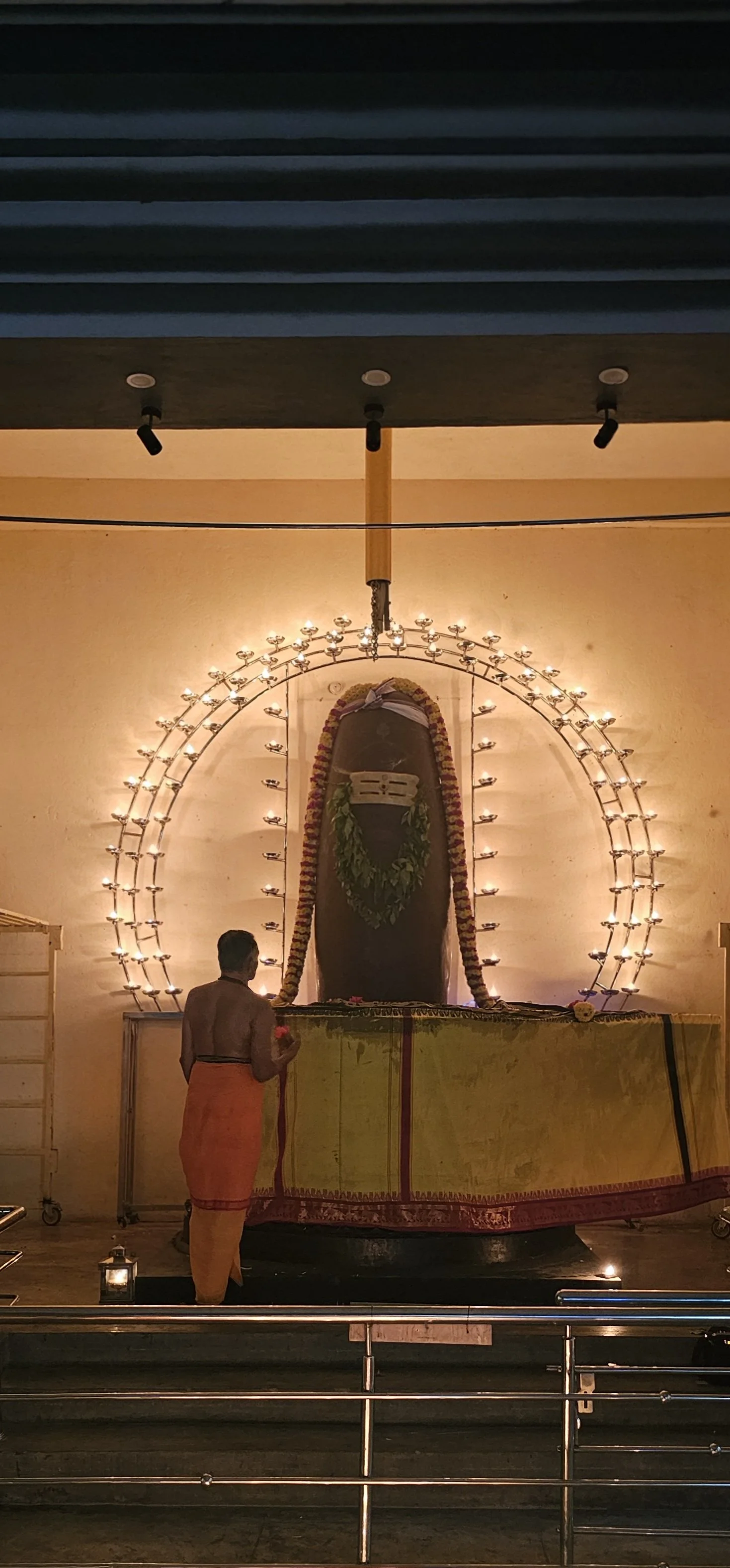
The worship of the Shiva Linga is explicitly mentioned for this vrata, for it was on this night that the Lord, out of boundless compassion for all pashus (beings), appeared as a formless form, symbolized by the Linga. In this way, the Linga stands not as an object, but as a living sign of grace—beyond name, form, and limitation.
The Puranas also recount moments of boundless compassion. When Brahma and Vishnu once disputed over supremacy, Shiva appeared before them as a limitless pillar of fire, without beginning or end. Unable to find its source or summit, they surrendered and worshipped the Shiva Linga. On the night of Shivaratri, Shiva appeared before them and blessed them.
Other stories reveal that even unknowing devotion is received on this night. A hunter, trapped overnight in a Bilva tree, unknowingly offered leaves to a Shiva Linga below while fasting and keeping vigil. A mouse, brushing against a dim lamp in a temple, caused it to burn brighter. In both instances, Shiva bestowed grace and liberation—revealing Himself as mercy itself.
For this reason, devotees honor Maha Shivaratri by remaining awake through the night, offering abhisheka to the Shiva Linga, chanting sacred names, and gathering in shared devotion. Among the four Shivaratris described in the Skandha Purana, the one observed on Krishna Paksha Chaturdasi in the month of Masi (Magha) is known as Maha Shivaratri, regarded as the most sacred of all.
This night is remembered not only as a ritual observance, but as a living invitation—to celebrate, to remember, and to receive the grace that flows freely to all who turn toward Shiva.